Introduction
Cold weather brings unique challenges when it comes to packaging, especially for products that react poorly to temperature swings. Whether you’re shipping food, medicine, or electronics, winter conditions can be a real threat to product integrity. Packaging that works in mild temperatures might not do the job once freezing wind and icy truck beds are added to the mix. That’s where winter-ready packaging comes in. It’s designed to keep products protected from extreme cold, moisture, and even short-term shock from handling.
The goal isn’t just to ship a box. It’s to make sure what’s inside arrives in good shape, without getting too cold or damp. Snowstorms, delayed routes, and changing indoor-to-outdoor conditions are all part of peak-season logistics. Once you’re dealing with outdoor pickups, warehouse loading docks, and long-distance transport in December, you’re in winter territory for real. And if you’re working with temperature-sensitive products, your packaging needs a little more thought this time of year.
Understanding Temperature-Sensitive Packaging
Temperature-sensitive packaging refers to any shipping setup that’s designed to help protect products from changes in heat or cold. These systems are especially useful when shipping goods during winter, where freezing temps or drastic drops in temperature can damage your product and lead to returns, complaints, or product spoilage.
There’s a wide range of products that need this kind of packaging. Some examples include:
– Pharmaceuticals: Many medications are syringe- or liquid-based, and need to stay within a narrow temperature range. Freezing can ruin their effectiveness, and delays in cold temps increase risk.
– Perishables: Food items, such as chocolate, dairy, and meal kits, are heavily affected by temperature. Cold air doesn’t always mean protection. Freezing the wrong item can completely change texture, taste, or safety.
– Electronics: Devices with batteries or memory components are also sensitive to cold. Prolonged exposure can shorten battery life or trigger performance issues.
What most packaging teams miss is that it isn’t just the outside cold that threatens the product. Temperature transitions like going from a warm warehouse through a cold truck to a heated front step lead to condensation. That moisture is just as much of a problem. It can affect packaging quality, labels, and even product performance. That’s why temperature-aware packaging has to address more than just insulation, which leads to the materials and features we’ll cover next.
Key Features Of Winter-Ready Packaging
Throwing a wool blanket in a box might keep a person warm, but protecting temperature-sensitive items takes more than just stuffing insulation around a product. Every part of the packaging—inside and out—needs to work together.
Here are a few features to look for when setting up packaging for the colder months:
1. Insulated Materials
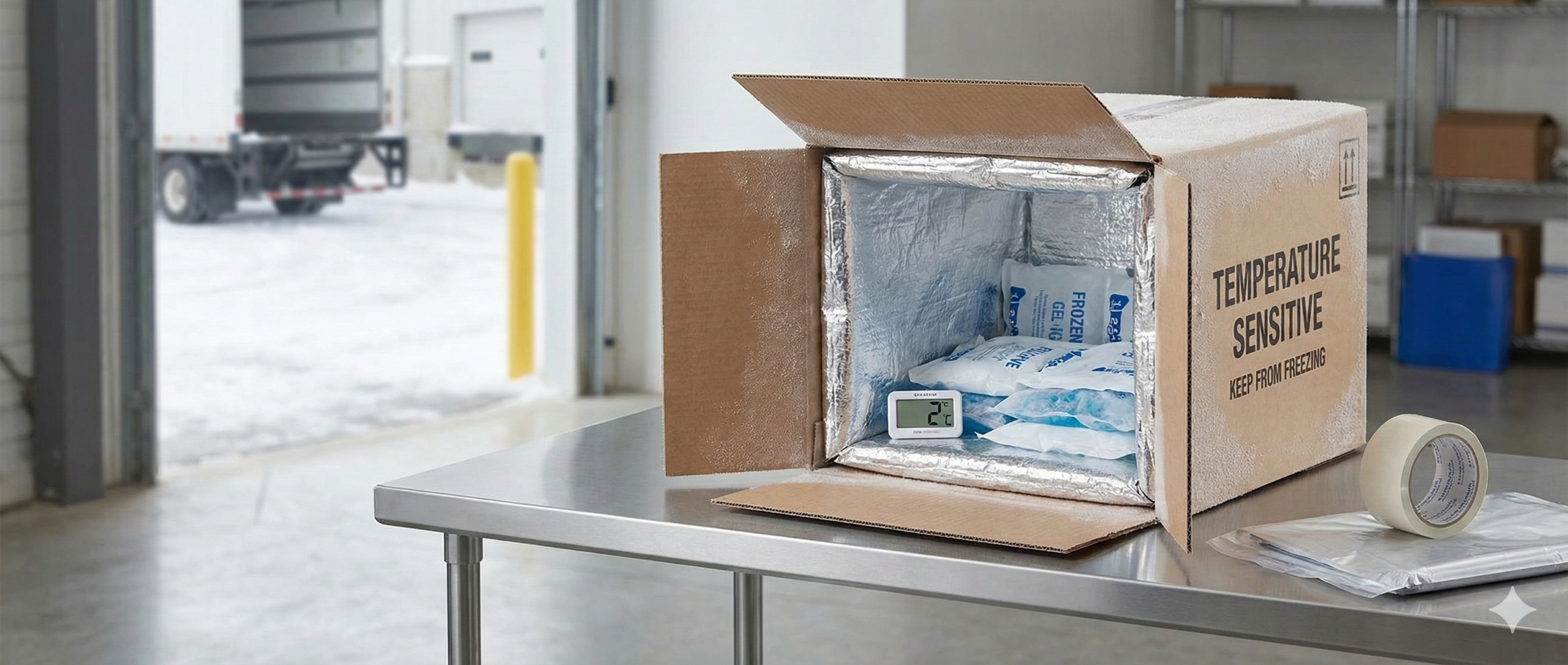
– Common materials include foam liners, thermal bubble wrap, and corrugated panels with heat-retention layers.
– These materials help slow down temperature change inside the box, giving your items a buffer during transit.
– Some systems use phase-change materials like gel packs to hold temperature longer on extended routes.
2. Moisture Resistance
– Condensation is a problem when shipping across environments with different temperatures.
– Moisture-resistant cartons, laminated inserts, and water-safe adhesives protect both the product and external branding.
– Make sure labels and designs don’t smear or fall off.
3. Temperature Indicators
– These small tools go inside the box and change color if the package moves outside its safe range.
– They help you and your customer know if the package stayed within limits.
– They’re useful for confirming or challenging claims after delivery issues.
You don’t have to include everything in every shipment. The right combination depends on your product, distance, and the likely conditions it will face. A two-hour trip won’t need the same setup as a four-day truck haul through snow. Choose materials that suit your delivery chain and layer up for added protection.
Best Practices For Preparing Winter-Ready Shipments
Having the right packaging materials in hand is only part of the solution. How you pack the product matters just as much. Even the highest-grade insulation can’t protect a shipment that’s packed loosely, sealed the wrong way, or lacks the right label. Follow-through at every step helps your box stand up to winter conditions.
Start with the right box size. Too much empty space allows cold air to circulate, and too tight can increase chances of crushing. You want enough space to insulate without overloading or under-padding the contents inside.
Here’s a checklist when packing winter-ready boxes:
– Use pre-chilled gel packs or phase-change pads if the product needs to stay above a certain temp range. Place these above and below the item, but not directly in contact unless the item allows for it.
– Make sure insulation layers are sealed properly. Tape or tuck thermal liners cleanly with no air gaps. That one mistake can let cold seep in without you noticing.
– Add a vapor barrier or interior film lining to block condensation. This extra layer goes between insulation and the item.
– Drop a temperature indicator inside if it’s needed. If you’re moving medical or food items and a temp range violation could be a problem, these tags give data at delivery time.
– Use strong packing tape rated for cold storage. Regular paper tape struggles with moisture. Consider poly-based tape for sealing.
– Don’t forget outer labels. Paint “Keep from Freezing” or “Temperature Sensitive” clearly on multiple sides. Labeling helps handlers know the contents need extra care.
Everything should work as a full system. If you’re using cold packs, but not sealing liners securely, cold will leak out anyway. If you’re sealing well but don’t block condensation, the product could still suffer from water exposure. Check that each layer supports the rest.
Protect Your Products This Winter
Cold temps can quietly ruin your package without visible clues from the outside. Frozen food, spoiled medication, or a dead battery all trace back to missed preparation. Winter-ready packaging gives you insurance against those outcomes. It protects what you ship, how your brand looks, and the experience the customer has when it shows up.
The good news is, it doesn’t take extreme costs or high-tech setups to get smarter with packaging. Matching the right materials with your product’s needs goes a long way, especially when combined with smart packing habits. Even quick changes, like using the right tape or winter-ready labels, are easy wins.
Whether you’re getting a single shipment out or planning regional deliveries every day, a better cold-weather setup helps cut loss, avoid delays, and keep trust. With some planning and the right tools on hand, you can ship confidently no matter how low the temperature drops.
If you’re looking to avoid delays and keep shipments running smoothly throughout the colder months, Rock Valley Packaging makes it easier with proactive planning and dependable materials. Take a closer look at how our customizable protective packaging solutions can help you safeguard products while keeping your production on track.