Introduction
When demand increases, the pressure to speed up production hits fast. But throwing more people at the problem only works for so long. That’s where automated packaging methods come in. These systems help manufacturers move faster without burning out teams or lowering quality. From sealing cartons to loading pallets, almost every step of the packaging process can now be automated to cut down on repeat tasks.
Automation isn’t just about higher output. It brings fewer product mistakes, cleaner lines, and less handling. That’s a win for both safety and consistency. Instead of relying on a crew to pack and label every single box, automated systems handle the heavy lifting while team members focus on bigger-picture work. Whether you’re running custom promo kits or boxing hundreds of stock units a day, there’s a way to scale up without tearing down what already works.
Understanding Automated Packaging Systems
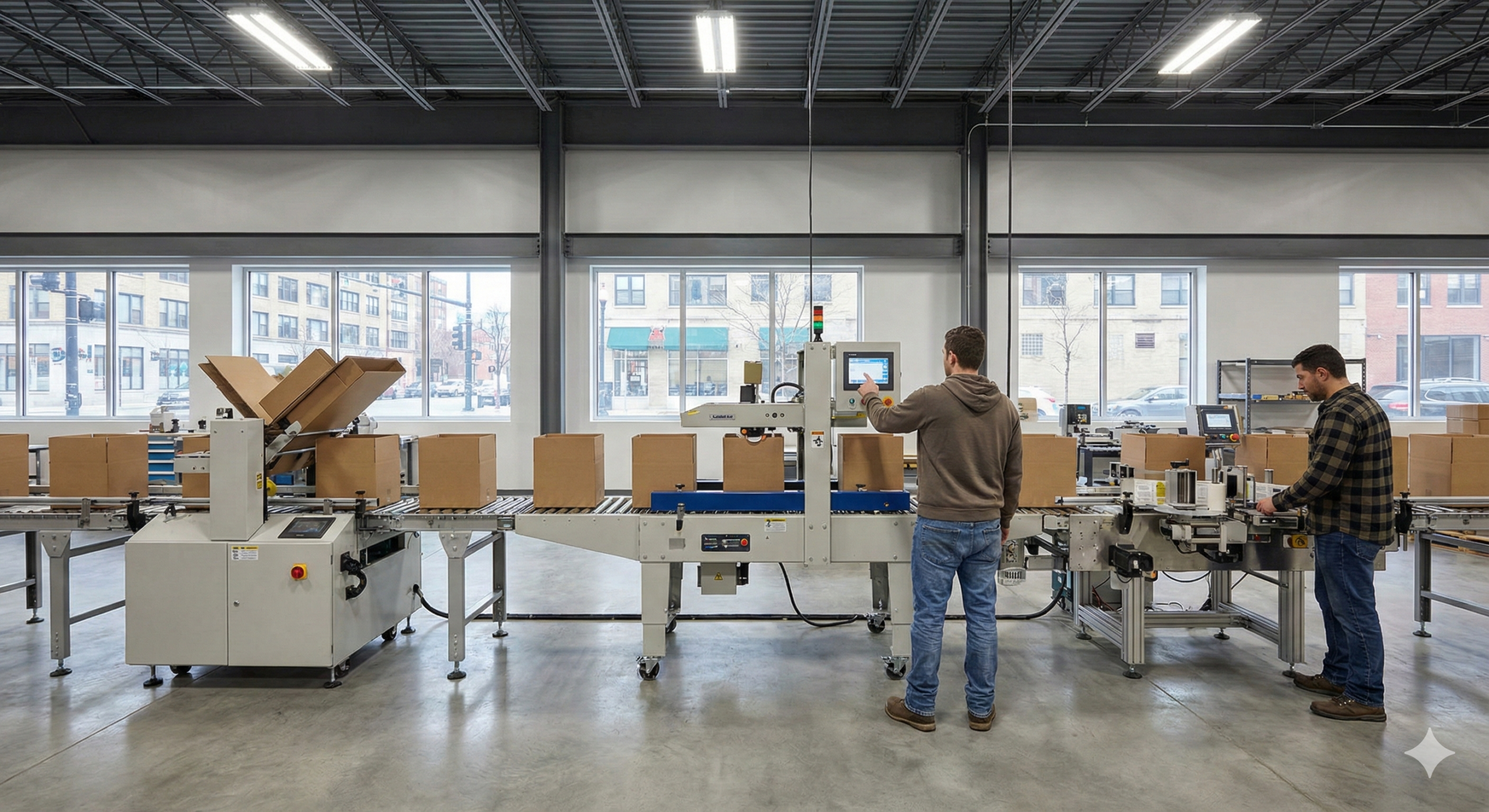
Automated packaging systems are machines or setups that handle packaging work with very little human help. Think of them as tireless production assistants. They’re often used to move, fill, seal, label, or wrap products automatically. Depending on how far you take the setup, these systems can run with just one operator overseeing the process.
Here are some types commonly used in packaging operations:
– Conveyor Systems: Used to move products from one step to the next. When paired with other machines, they can complete full packaging lines.
– Robotic Arms: These pick, place, and pack items quickly. They’re helpful when you work with odd shapes or fragile goods.
– Automated Case Packers: These pack loose items into cartons or trays. Common in food, beverage, and consumer product lines.
– Wrappers and Sealers: Handle final packaging steps like shrink-wrapping or sealing boxes with tape, doing it the same way every time.
– Labeling Machines: Apply product labels or barcodes with speed and exact position, every single cycle.
These tools often work best when used together. Some operations use fully automated lines from start to finish. Others keep a hybrid model that supports manual labor with machine help. The best setup depends on your process. No need to go all-in right away. Even swapping out one manual task, like hand-taping, for an auto taper can free up time and hands.
Advantages of Implementing Automated Packaging
The biggest advantage of automation is speed. Machines don’t hydrate, rest, or slow down as shifts drag on. Once calibrated, they run at a steady pace without slips or delays. That keeps your workflow moving evenly and helps you hit delivery goals without calling in extra crews.
The quality edge matters, too. Human hands can misplace a label, skip a barcode, or short-fill a pouch—especially with long shifts and repeat motion. Machines, by contrast, don’t get bored or tired. This means clean, identical results for every box and a lower chance of customer complaints or rework.
Labor cost savings follow naturally. You’re not hiring people just to manage rush orders. Instead, your trained workers monitor the system or shift into quality control and prep roles. That lets you move jobs faster without paying for more hours. When crews don’t spend their time fighting delays, they can help spot other areas to improve.
Here’s how automation supports better output:
– Speeds up the cycle, especially with bulk runs or peak seasons
– Reduces physical strain and injury risk by replacing repeat tasks
– Raises consistency, making your QC team’s job easier
– Lowers waste due to better material control
– Saves space by replacing manual stations with compact machines
Every shop’s layout is different. Start by reviewing your own line and seeing where machines could remove bottlenecks or busywork. Whether you’re packing cosmetics, classroom kits, engine parts, or frozen meals, automation makes it possible to grow steadily without overtaxing your team.
Steps to Implement Automated Packaging Methods
Moving to automation doesn’t have to happen overnight. Going one step at a time is often smarter. It’s more about solving actual issues in your current process than chasing the newest, flashiest machine.
Step one is a full walk-through of your present layout. Where does work slow to a crawl? What tasks chew up the most hours or hands? If your staff spends too long sealing boxes or lifting containers onto pallets, start from there. Entry-level upgrades like auto baggers or case erectors can bring results without big disruption.
Once you’ve pinpointed the pain points, start comparing gear options that match your production style. A batch-based operation might need different support than a setup that runs lots of short orders. Think about the available space too. Some great-sounding builds look terrific online but won’t physically fit into your staging area.
When it’s time to install, ease into it. A phased approach lowers the risk of downtime. Work with your engineering team to roll it out during evenings or weekends, when fewer jobs are running. That way, the rest of the line keeps moving while you experiment and make changes.
Don’t forget training. Machines only run well when the people behind them know how to use them. Staff should learn to spot quirks, report wear, and carry out light upkeep before it turns into a serious issue. Some facilities plan these practice runs during slower seasons. They simulate changes and gather feedback so that when higher volumes hit, the crew is already comfortable with the updates.
Real-World Example and Best Practices
A shop in the Midwest that builds tool kits made the switch to automation last fall. Before they upgraded, employees were sealing cartons by hand, and the repetitive motion caused strain halfway through the shift. They added one automated case sealer for their standard boxes. After a five-week test run, they added another. Two months in, they noticed faster packing lines, lower error counts, and fewer overtime requests.
Not every automation move brings perfect results out of the gate, but here’s what usually works well:
– Start with one upgrade. Get results, then build from there.
– Choose systems you can scale. Your floor needs may change.
– Measure output and track issues, even on good days.
– Stay close to the operators. They’ll notice what’s off before anyone else.
– Stock spare parts. Even solid machines need fixes, and downtime costs more than backup inventory.
When you fold automation into your process like part of the team—not just equipment off to the side—you’ll get more out of it. These systems should make everyone’s job easier and your product flow smoother.
Build More, Stress Less with Automation
Automated packaging won’t solve every workflow gap. But it can make a dent in the daily grind. Machines can knock out the boring stuff at record speed, giving your team time back to focus on the things that matter—like quality checks, rush jobs, or process tweaks.
Whether you’re trying to cut down turnaround time, reduce missed labels, or take the heat off a worn-out crew, automation gives you another direction to grow. It’s flexible, not one-size-fits-all. Start where the bottlenecks live, plug in the right tools, and watch the line run cleaner. With fewer stops and smoother output, there’s more space to build, test, and plan what’s next.
Ready to boost your operations with cutting-edge solutions? Explore our industrial packaging solutions to see how Rock Valley Packaging can help streamline your processes for improved efficiency. Our team is here to ensure your products are packaged with resilience and precision, setting you up for success every step of the way. Looking forward to partnering with you!